


The Architectural Route
- Home
- Discover Carbonia
- The Architectural Route
The Architectural Route
In Carbonia, architecture lives among the streets of the city
Walking through Carbonia feels like wandering through an open-air museum, where every street, square, and building tells a story. Its urban and architectural heritage is unique and fits seamlessly into a Sulcis Iglesiente vacation itinerary rich in culture and discovery.
Carbonia is part of the ATRIUM route (Architecture of Totalitarian Regimes of the 20th Century in Europe’s Urban Memory), a project promoting cultural tourism linked to the urban and architectural legacy of 20th-century totalitarian regimes. This international circuit makes Carbonia an unmissable stop for those who love combining a passion for architecture with a curiosity to explore the past.
From the historic Piazza Roma, the vibrant heart of the city, to the striking Portici delle Poste, Carbonia’s urban center invites visitors to wander its streets and be captivated by its architectural identity. Along the way, symbolic references to the city’s mining history abound, such as the “great totems” evoking the iron used in the mines.
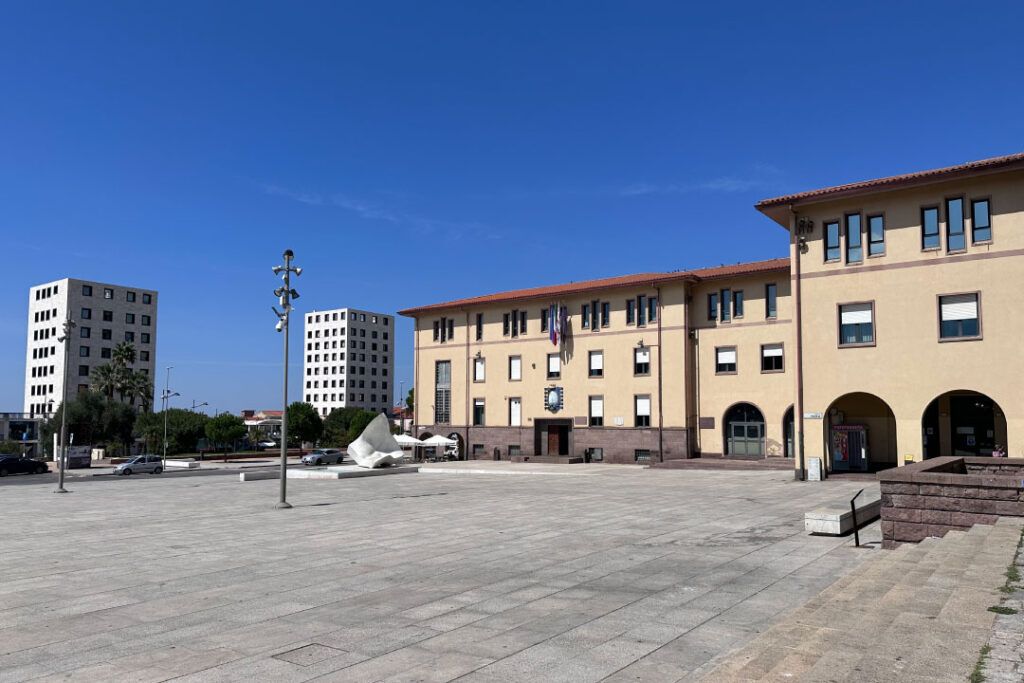

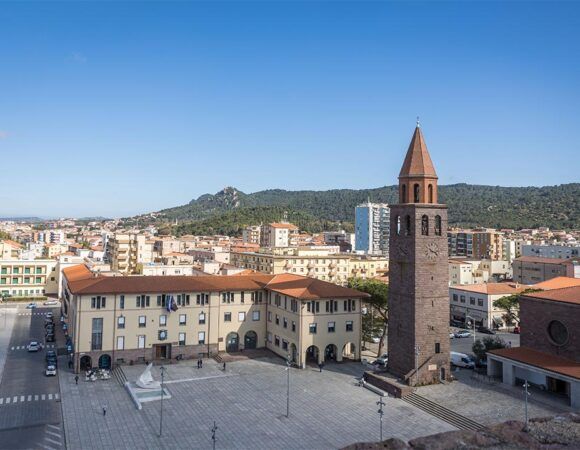
A symbol of the city and a landmark for both residents and visitors, Piazza Roma bridges the past and present. At its center stands the imposing clock tower, an icon of the Fascist era that marked Carbonia’s foundation in 1938. Today, the square is a vibrant meeting place, perfect for starting an itinerary that explores the city’s wonders.
If you’re planning a vacation in the Sulcis Iglesiente region, a stop at Piazza Roma is an excellent opportunity to soak in the authentic atmosphere of Carbonia and appreciate its unique architecture.
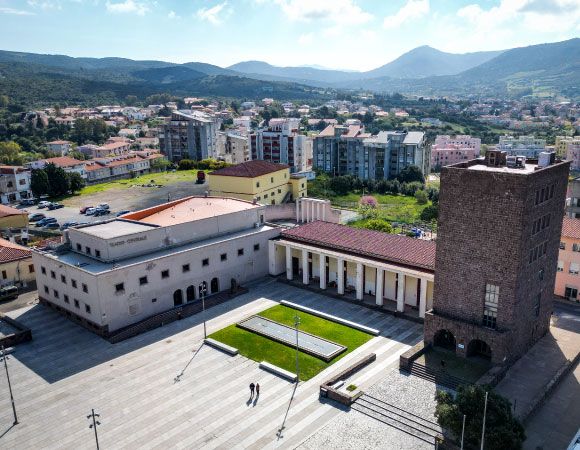
Adjacent to Piazza Roma, the Dopolavoro Cine-Teatro is one of the city’s iconic buildings. Originally designed as a space for recreational and cultural activities, this complex was the heart of Carbonia’s social life during its early decades.
Today, the Dopolavoro has been transformed into a service center and multifunctional hub, while preserving the memory of its original purpose. It is a perfect example of how Carbonia has successfully combined historical preservation with modern adaptation, making it an intriguing stop for visitors.
Villa Sulcis is one of the symbolic buildings of founding-era Carbonia. It was built at the end of the 1930s as the official service residence of the Director of the mines. The building was designed by architect Eugenio Montuori in a Rationalist style. It stands in a central park, emphasizing the apex of the company and social hierarchy of the mining city.
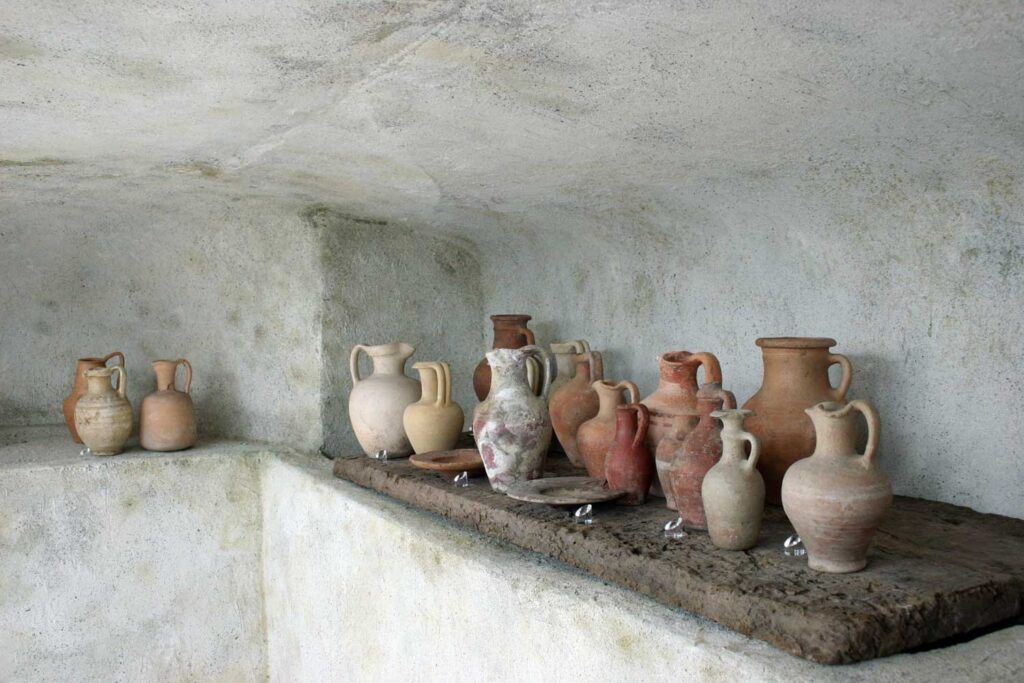
Since 1988, it has housed the Archaeological Museum of Villa Sulcis. The museum was expanded and renewed in 2008, and it continues to play a central role in the city’s cultural life.
The Museum of Villa Sulcis is the hub of the Carbonia Museum System. It follows the entire cultural heritage chain, from excavation to public dissemination. It exhibits finds that reconstruct the history of Sulcis, from the oldest human presences at Su Carroppu to Phoenician and Punic evidence from Monte Sirai, Sulky, and Bitia. The display continues through the Nuragic phase and later periods, including the Roman age.

Among Carbonia’s most fascinating symbols is the Lotto B District, established in the 1940s to house workers employed in the region’s mines. This neighborhood is not only a prime example of historic urban planning but also a poignant testament to the challenging and communal lives of its residents at the time.
At its heart lies the Workers’ Church (Chiesetta Operaia), a small yet significant structure that encapsulates a vital chapter of history.
During your Sulcis holiday, a visit to this district offers a step back in time, unveiling a place that preserves memories of sacrifice, faith, and hope—deeply intertwined with Sardinia’s mining heritage.
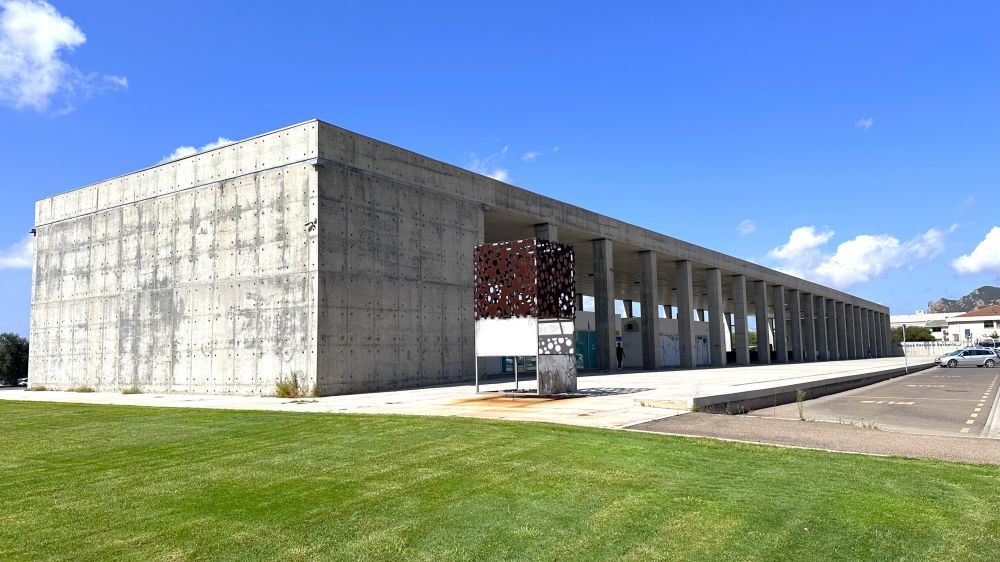
Located in the Serbariu area, the Centro Intermodale Stazione is a vital hub for urban and intercity connections in Carbonia. This facility is more than just a modern station; it symbolizes the evolution of Sardinia’s transportation system, adapting to contemporary needs while preserving ties to local history.
During your stay in the Sulcis Iglesiente region, the Centro Intermodale can serve as a convenient starting point for exploring the area’s other wonders, making your journey more comfortable and sustainable.
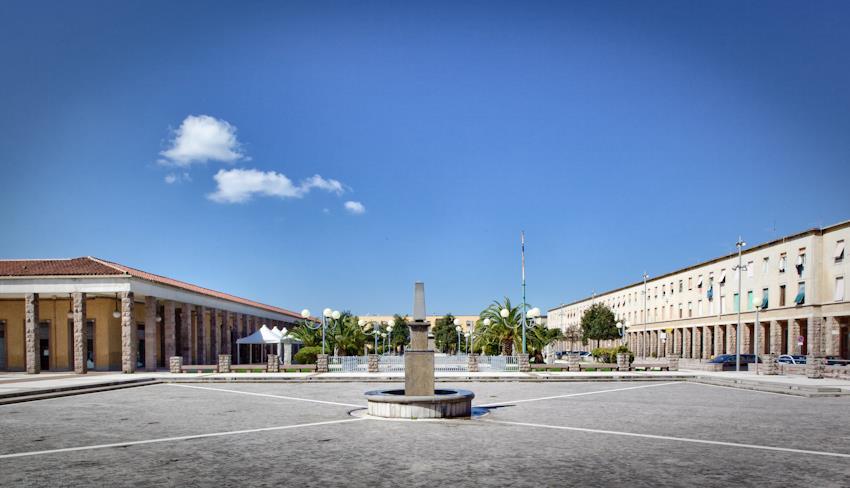
Piazza Venezia is the main urban space of Cortoghiana, a mining village designed in 1940 by architect Saverio Muratori to house the workers of the mines in the area.
It is a large square with a Rationalist plan, conceived as a place for social life and services. Long buildings with porticoes define the space, creating a continuous front and a covered walkway. This layout turns the square into a kind of “open-air hall” for the neighbourhood.
The square is also a witness to local history. During the Ventennio, the settlement was called “Villaggio Umberto”. After the war, it became Cortoghiana and its name and economic context changed, but Piazza Venezia has retained its role as the central point of reference for meetings, events, and community life.
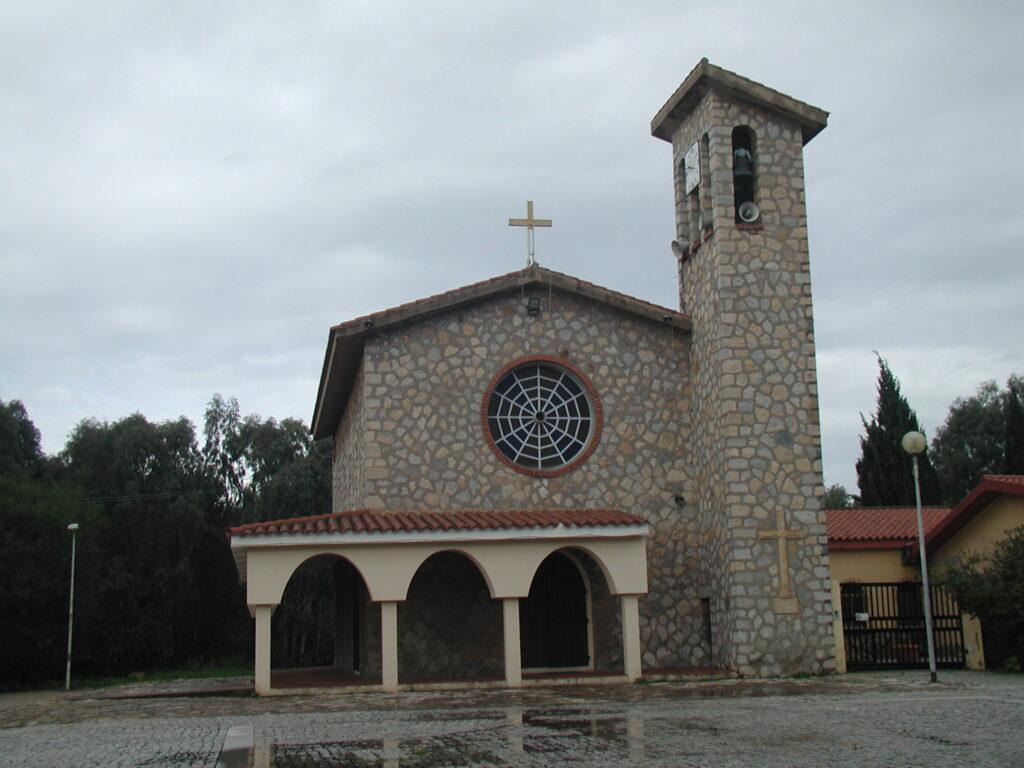
Bacu Abis, today a hamlet of Carbonia, was born as a workers’ village linked to coal mining and, in the 1930s, became a significant example of Rationalist urban planning.
The oldest core was already connected to extractive activities in the 19th century. Between 1936 and 1938, the settlement was reorganised under a plan attributed to Gustavo Pulitzer-Finali. From 1937, Bacu Abis was incorporated into the new Carbonia and provided with decentralised municipal services.
The most representative focal point is the system of squares and open widenings. These spaces are fronted by places of collective life, such as the dopolavoro (workers’ leisure club) and the cinema-theatre, the spaccio (store) and the Casa del Fascio.
All of this stands in a direct relationship with the Church of Santa Barbara, patron saint of miners. The church has a single nave, a large oculus on the façade, exposed stonework, a continuous portico, and a quadrangular bell tower. In the public space, it brought together everyday life and the representation of power.